
A Rare Case of Polar Bear Adoption
Lead Scientist Cate Collins shares a remarkable story of polar bear adoption from this past fall in Churchill, Manitoba.
Adoption isn’t just a human phenomenon. It exists across the animal kingdom. On the rugged shores of Año Nuevo Island off California, northern elephant seal pups often get separated from their mothers due to rough surf and high tides. In these crowded colonies, mothers who have lost their own pups frequently step in as foster parents.
In the avian world, adoption is even more strategic. The chicks of seabirds will abandon their nests and seek out another with younger or fewer chicks. By doing so, they often secure more food and longer parental care than they would have received in their original nests.
But what about in polar bears? While common in some species, adoption among polar bears is incredibly rare. This fall, researchers near Churchill, Manitoba, witnessed a remarkable exception.
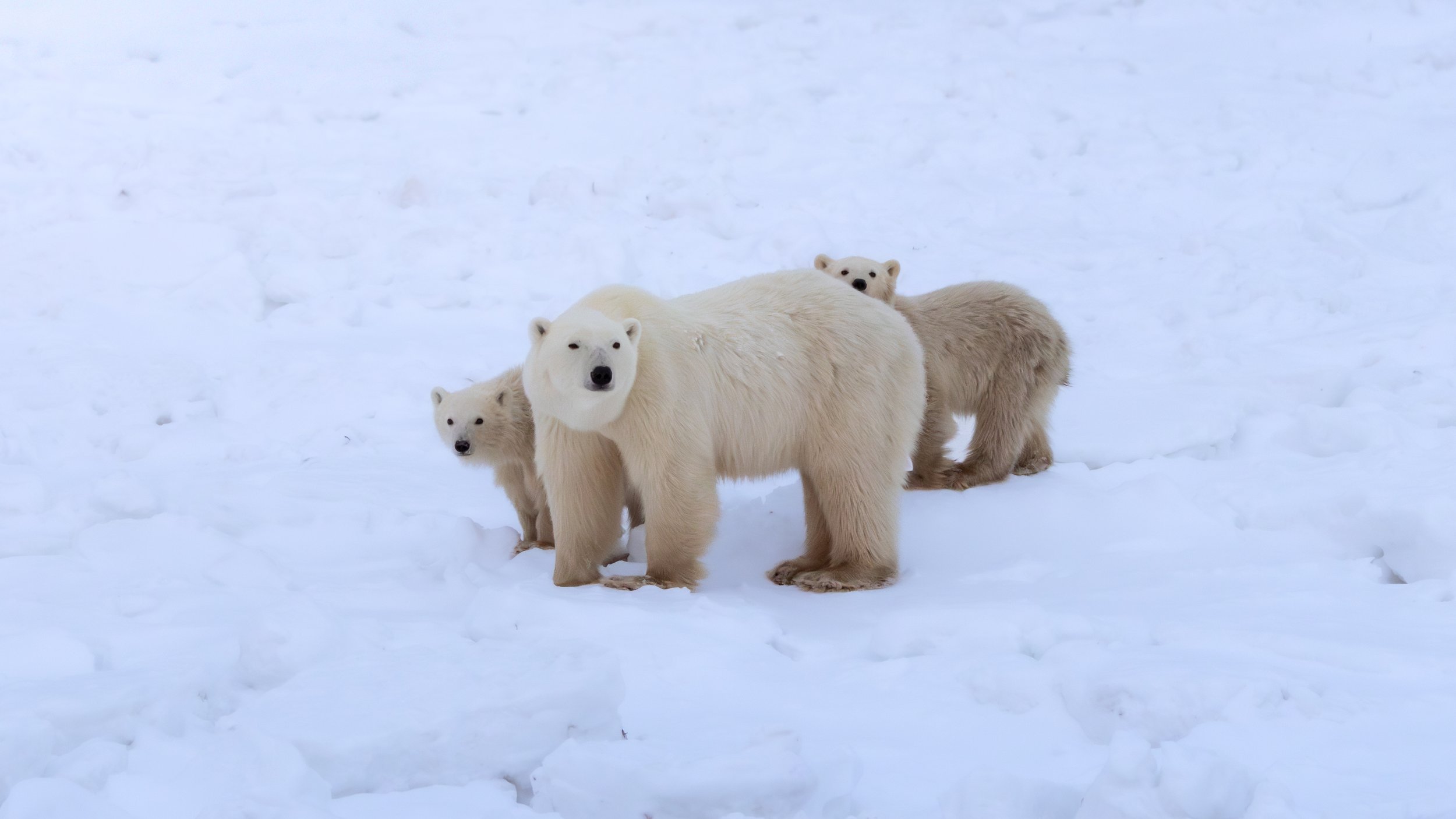
Spotted fall 2025 in Churchill: a polar bear mom with her two cubs-of-the-year.
An Adoption by Bear X33991
In the spring of 2025, researchers from Environment and Climate Change Canada first encountered a mother bear, known as X33991, as she emerged from her maternity den with a single cub. The team tagged both the mother and her offspring.
When she was spotted again this fall, the researchers were surprised: bear X33991 now had two cubs. Sometime during the summer months, she had adopted a "bonus cub" into her care. Genetic samples have since been taken from the new cub so researchers can try to identify its biological mother and perhaps solve the mystery of how they became separated.
Survival Against the Odds
Polar bear cubs typically stay with their mothers for 2.5 to 3 years to learn the essential skills needed to survive the harsh Arctic environment. Without this adoption, the orphaned cub almost certainly would not have survived.
However, the journey is far from over. The family still faces the challenge of making it through their second year.
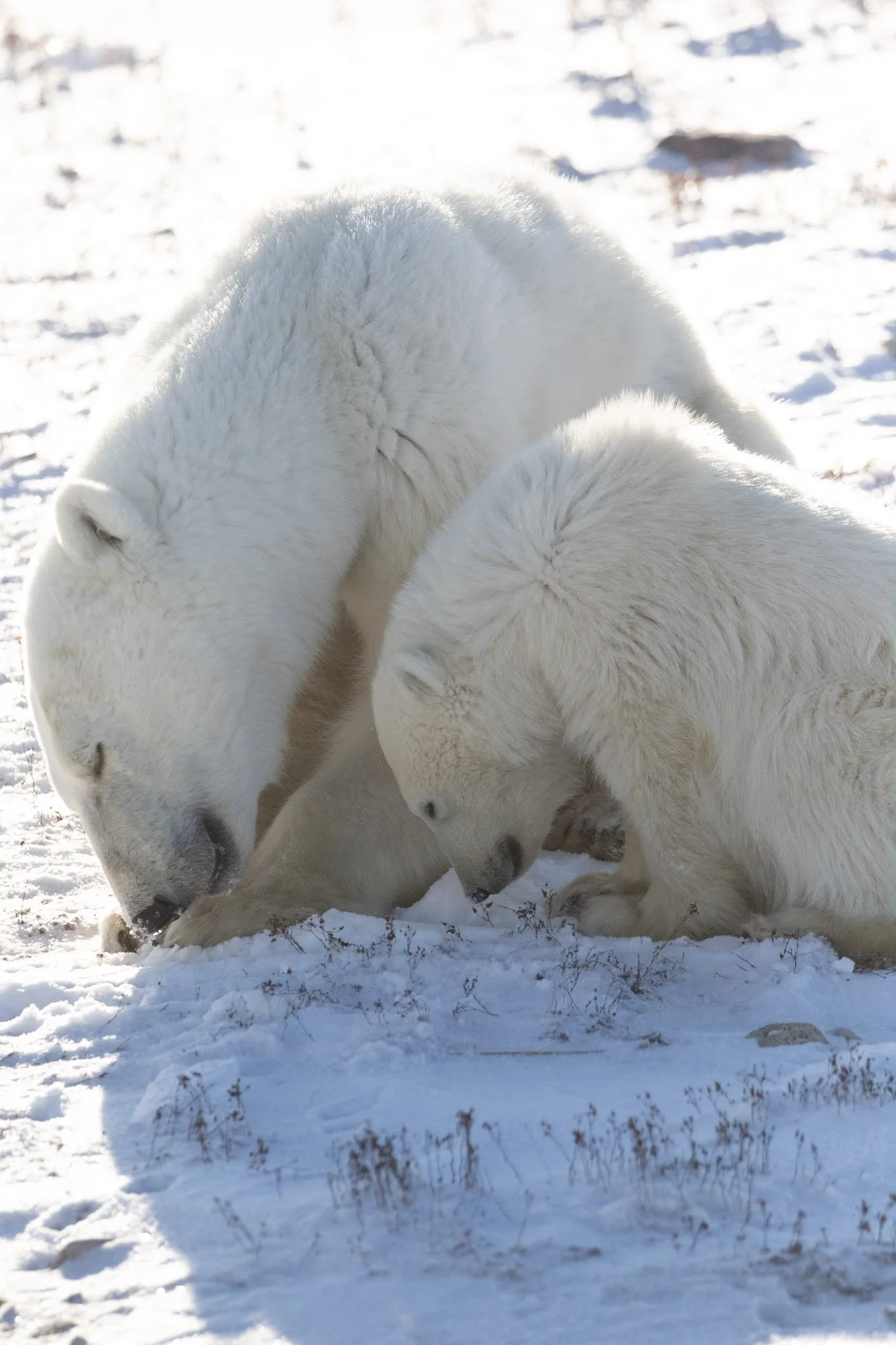
A polar bear cub mimicking mom’s every move as it learns how to survive in the unforgiving Arctic.
Tracking the Journey
Because X33991 is part of an ongoing study, she is equipped with a GPS tracking collar. Since October 2025, she has traveled over 800 km up the coast from Churchill and across the sea ice on Hudson Bay with her cubs. You can track their movements using Polar Bear International’s Polar Bear Tracker.
Why This Matters
To put this event into perspective, this is only the 13th case of adoption observed in the Western Hudson Bay population over 45 years of study, involving more than 4,600 bears. Researchers are constantly learning more about polar bears, and cases like this help to contribute to what we know.
For now, the mother and her two cubs are out on the sea ice, hunting for seals. We await an update in late spring or early summer when the ice melts and the bears return to shore, allowing researchers to check in on this mother and her two cubs.
REFERENCES
Polar Bears International. (2026, January 1) Rare polar bear cub adoption captured on video. https://polarbearsinternational.org/news-media/articles/rare-polar-bear-cub-adoption-captured-on-video
BBC Future. (2014, March 11) Why do animals adopt? https://www.bbc.com/future/article/20140312-why-do-animals-adopt
