
Grizzly Bear Cubs
Lead Scientist Cate Collins explores how grizzly bear cubs grow, learn, and eventually set out on their own.
On our one-day grizzly bear expeditions to the Khutzeymateen, we’re sometimes lucky enough to spot moms with their cubs from our catamaran. Let’s take a closer look at the life stages of a grizzly cub from birth to setting out on their own.
Mating & Birth
Grizzly bears mate from mid-May to early-June, and yes, we occasionally witness the action on our expeditions. During mating, the embryo will be fertilized, but it doesn’t implant in the uterus until the fall. This adaptation is called delayed implantation, and it gives the bear time to put on the necessary fat reserves to sustain her through the gestation and the winter hibernation. If her body is not in good enough condition to support cubs, the embryo will be reabsorbed into her body and she will try again the following year.
Grizzlies retreat into their dens in the late fall, and it is during this period that implantation occurs and the cubs begin to grow. After a short gestation, cubs are born in the new year. Including delayed implantation, total gestation lasts 180-250 days.
Newborn cubs are born blind and weigh just over 1 lb. Litters typically consist of one to four cubs, with twins being the most common.
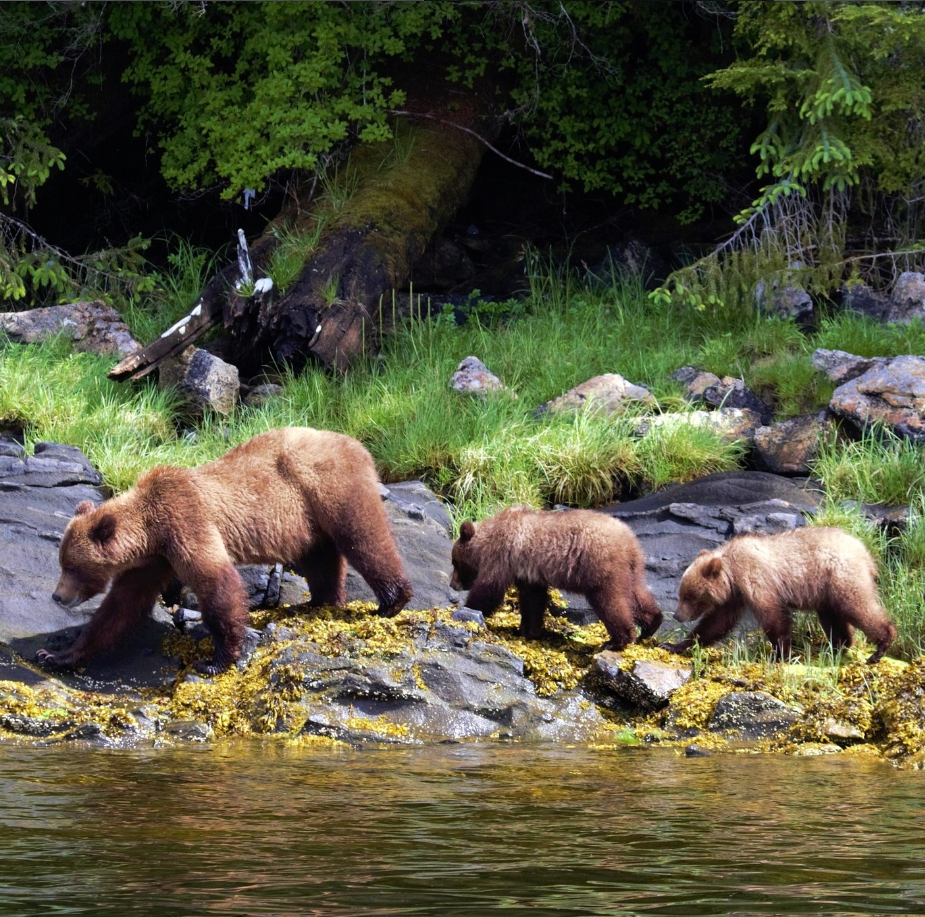
A mama with her two yearling cubs on the shores of the Khutzeymateen.
Early Stages
After birth, the cubs remain in the den with their mother for several months. They nurse on her rich milk and grow rapidly while she continues to doze. By the time the family emerges from the den in spring, the cubs usually weigh around 18 pounds.
Once outside, the cubs will begin to learn to forage for food with mom, adding some solid food to their diet while continuing to nurse.
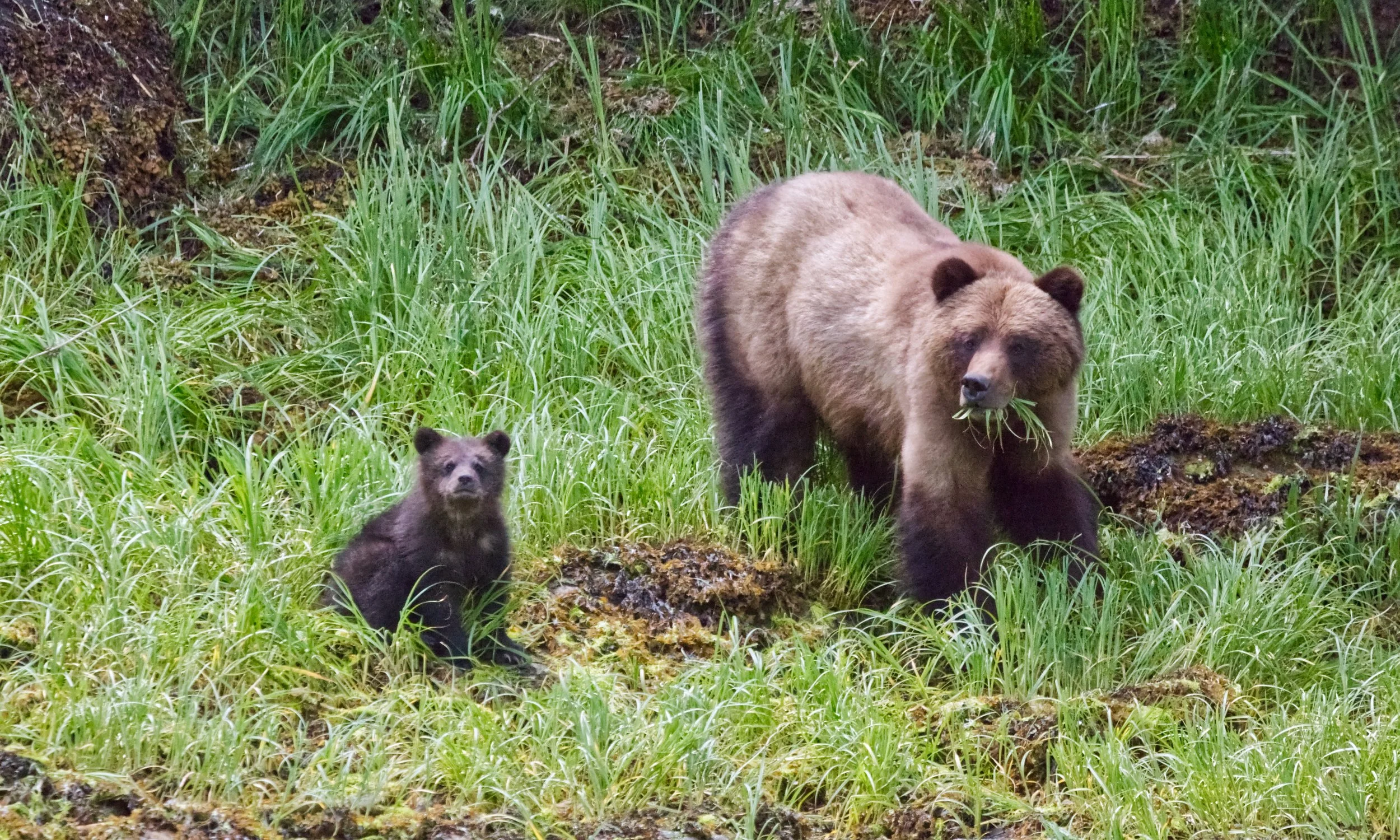
This cub was learning to eat sedge, a grass-like plant full of protein, on our June 15 One-Day Grizzly Bear expedition last year.
Growing Up
Over the next two to three years, cubs learn everything they need to survive. Their mother teaches them to forage for food, avoid aggressive males, follow seasonal food sources, and to dig dens for winter hibernation. Female grizzlies are highly protective, and many defensive bear encounters occur when a mother is protecting her young.
Mothers with cubs are often among the first bears to return to their dens in the fall, typically around mid-November, as food sources begin to decline.
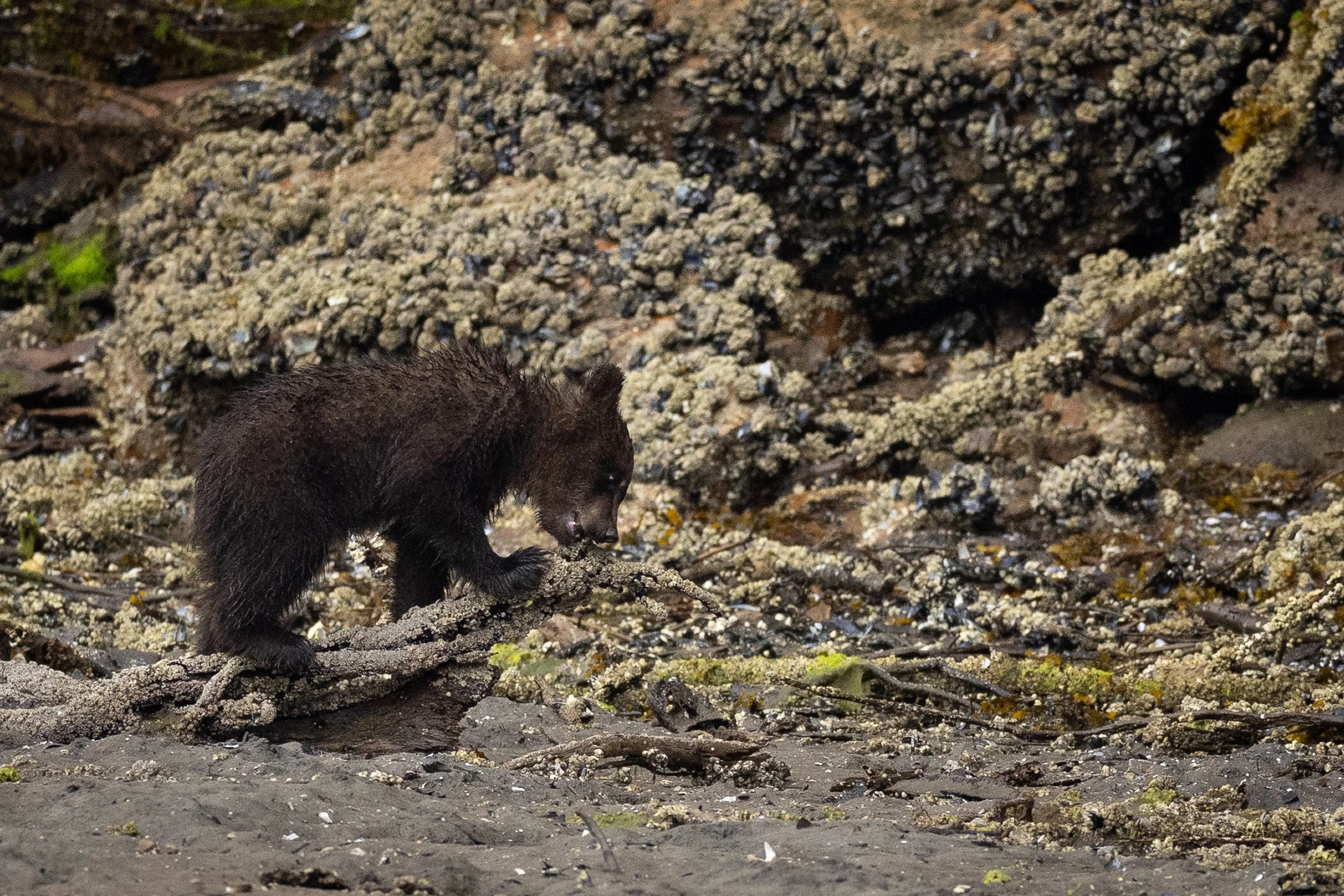
This cub-of-the-year (4 months old) was foraging for clams at low tide with mom close by.
Transition to Independence
At around two to three years of age, cubs become subadults and separate from their mother to live independently. During this stage, young bears must establish their own home ranges. Their natural curiosity can sometimes bring them closer to human areas as they search for food.
Subadults are generally considered fully mature around five years old, when they may begin reproducing. Female grizzly bears typically have their first litter between five and eight years of age and reproduce only every three to five years, giving them one of the lowest reproductive rates among North American land mammals.
In the Khutzeymateen, we most often observe mothers teaching their cubs to graze on sedge or dig for clams along the shoreline. Join us on one of our one-day grizzly bear expeditions this spring for the chance to experience these unforgettable moments firsthand.
References
Parks Canada Agency. (2025, September 4). Grizzly bears: Bears in the mountain national parks. Government of Canada.
https://parks.canada.ca/pn-np/mtn/ours-bears/generaux-basics/grizzli-grizzly
Wikipedia contributors. (2026). Grizzly bear. Wikipedia, The Free Encyclopedia.
https://en.wikipedia.org/wiki/Grizzly_bear
About Gold Star Canadian Tours
At Gold Star Canadian Tours, we focus on providing the worlds best travel experiences to authentically Canadian destinations. Our flagship tour is a convenient 1-day Polar Bear Expedition with dedicated non-stop charter flights from major airports directly to Churchill, Manitoba. With Gold Star Canadian Tours, the wonders of the Arctic are closer than ever. Your Adventure Awaits!
